


For small and medium-sized businesses, every lead matters. Yet many sales opportunities are lost because follow-ups are delayed, inconsistent, or forgotten altogether. This is where Lead Nurturing Workflows become essential. As a result, businesses can automate follow-up activities, engage prospects at the right time, deliver relevant information, and ultimately move leads smoothly through the sales pipeline.
Modern sales teams need more than spreadsheets and reminders. With tools like Zoho CRM, businesses can build intelligent workflows that automate repetitive tasks while maintaining a personalized customer experience. Effective Lead Nurturing Workflows help sales representatives spend less time on manual administration and more time building relationships and closing deals.
Why Lead Nurturing Workflows Matter for SMB Sales Teams
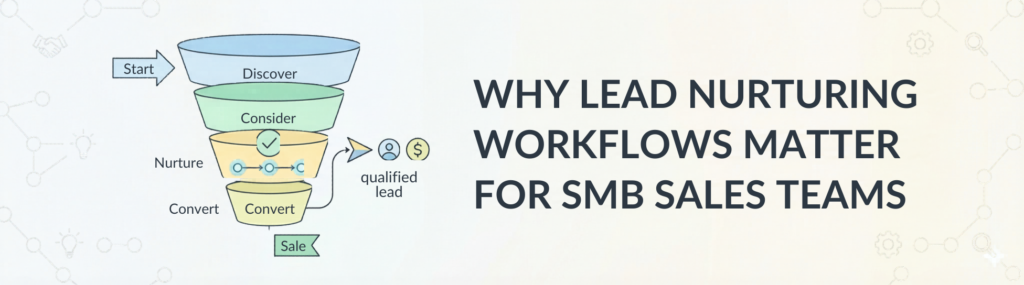
If you’re running a small or medium-sized business, losing leads isn’t just frustrating, it’s expensive. The difference between a lead slipping through the cracks and becoming a customer often comes down to how effectively your follow-up process is managed. Therefore, Lead Nurturing Workflows act as an automated system that guides prospects through the buyer journey. Rather than relying on manual reminders, these workflows automatically trigger actions based on customer behavior, ensuring every lead receives timely and relevant communication. Whether a prospect downloads a resource, opens an email, requests a demo, or becomes inactive, automated workflows ensure no opportunity is overlooked.
Understanding the Core Components of Lead Nurturing Workflows
Before creating workflows in CRM software, it’s important to understand the building blocks that make them successful.
Lead Status and Segmentation
Every lead is different. Some are just beginning their research, while others are ready to make a purchase decision. Segmenting leads based on their status allows businesses to send relevant messages that align with customer needs. Examples include:
- New inquiries
- Marketing-qualified leads
- Sales-qualified leads
- Existing customers
- Dormant prospects
Furthermore, effective segmentation ensures that Lead Nurturing Workflows deliver the right message at the right stage of the sales cycle.
Trigger-Based Automation
Triggers are the events that activate workflow actions. Common triggers include:
- New lead creation
- Form submissions
- Email opens
- Website visits
- Status changes
- Inactivity periods
These triggers allow businesses to automate engagement without constant manual oversight.
Automated Actions
Once triggered, workflows can perform a variety of actions automatically:
- Send follow-up emails
- Create tasks for sales representatives
- Update lead records
- Schedule meetings
- Send notifications
- Assign leads to team members
These actions improve consistency while reducing administrative workload.
Timing and Follow-Up Cadence
Timing is critical. Too many emails can overwhelm prospects, while too few can result in missed opportunities. Well-designed Lead Nurturing Workflows, therefore, balance persistence with value while delivering communications at strategic intervals throughout the customer journey.
How to Configure Zoho CRM for Effective Lead Nurturing Workflows
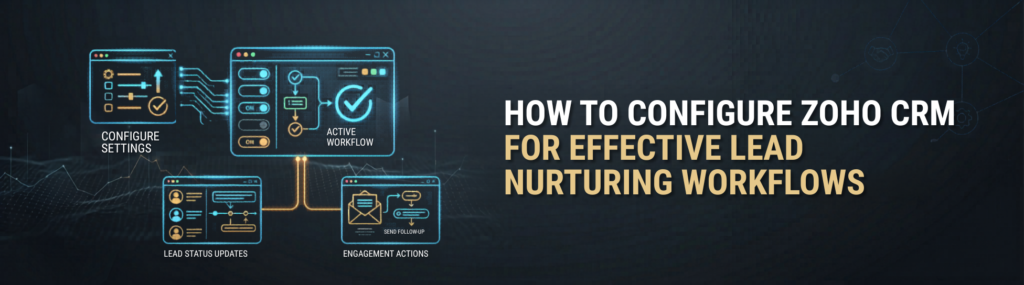
Businesses using Zoho CRM can create sophisticated automation processes without requiring advanced technical expertise. Learn more about Zoho CRM to understand its full potential. Start by creating a workflow rule under: Setup → Automation → Workflow Rules Give the workflow a clear name such as “Lead Nurturing Sequence.” Next, define the trigger event. This could include:
- New lead creation
- Lead source assignment
- Status updates
- Website form submissions
Once the triggers are selected, it is important to establish criteria to ensure that only relevant leads enter the workflow. Consequently, this prevents unnecessary communication and improves campaign effectiveness.For businesses seeking professional CRM deployment and optimization, Zoho Implementation Services can help configure workflows that align with specific sales objectives.
Creating Automated Email Sequences for Better Lead Engagement
One of the most valuable aspects of Lead Nurturing Workflows is automated email communication. Additionally, consistent follow-up keeps prospects engaged without requiring manual intervention from sales teams. Using Zoho Campaigns and Zoho Marketing Automation, businesses can design personalized email journeys that adapt to customer behavior.
Example Lead Nurturing Email Sequence
- Day 0: Welcome email with requested resource.
- Day 3: Educational content such as case studies or success stories.
- Day 7: Product-focused email highlighting solutions and benefits.
- Day 10: Invitation to schedule a consultation or product demonstration.
- Day 14: Final follow-up with additional resources and support options.
Each communication should provide value rather than simply pushing for a sale. The goal is to build trust and credibility while gradually moving prospects toward a buying decision.
Personalization: The Secret to Successful Lead Nurturing Workflows
Automation doesn’t have to feel robotic. Modern CRM systems allow businesses to personalize messages using dynamic fields such as:
- First name
- Company name
- Industry
- Previous interactions
- Downloaded resources
- Product interests
This level of personalization significantly improves engagement rates and helps prospects feel understood. For example, if a prospect attended a webinar, future emails can reference that specific event. If they downloaded a guide about CRM implementation, follow-up messages can focus on implementation best practices and success stories. Personalized Lead Nurturing Workflows create stronger connections and improve conversion rates.
Combining Automation with Human Interaction
While automation improves efficiency, human interaction remains critical during key stages of the sales process. The most effective workflows combine automated communication with manual outreach. For example:
- Automatically assign a sales task after three unopened emails.
- Notify a sales representative when a prospect visits pricing pages.
- Schedule follow-up calls when engagement scores reach a certain threshold.
This balanced approach ensures that automation supports, rather than replaces, meaningful customer conversations. Businesses working with Zoho Implementation Services often achieve better results because workflows are strategically aligned with real-world sales processes.
Common Mistakes to Avoid When Building Lead Nurturing Workflows
Even powerful automation tools can produce poor results if implemented incorrectly. Avoid these common mistakes:
- Over-Automating Communication: Sending too many emails can overwhelm prospects and increase unsubscribe rates.
- Ignoring Segmentation: Generic messaging often fails to resonate with different audience groups.
- Failing to Monitor Performance: Workflows should be reviewed regularly to identify bottlenecks and optimization opportunities.
- Lack of Personalization: Automated messages that feel generic often produce lower engagement rates.
- No Human Follow-Up: Some opportunities require direct sales engagement to move forward.
By avoiding these pitfalls, businesses can maximize the value of their Lead Nurturing Workflows and improve overall sales performance.
Quick Takeaways
- Use Lead Nurturing Workflows to automate repetitive follow-up activities.
- Segment leads based on status, behavior, and engagement levels.
- Utilize Zoho CRM automation tools to streamline lead management.
- Personalize communications using customer data and behavioral insights.
- Combine automated emails with strategic human interaction.
- Monitor workflow performance and continuously optimize results.
Final Thoughts
Overall, effective Lead Nurturing Workflows can dramatically improve how SMB sales teams manage and convert leads. By combining automation, personalization, and strategic follow-up, businesses can create a consistent sales process that reduces missed opportunities and increases revenue. Whether you’re just getting started with Zoho CRM or looking to optimize existing processes, investing in well-designed lead nurturing strategies can deliver long-term growth and stronger customer relationships. As competition continues to increase, businesses that implement scalable Lead Nurturing Workflows will be better positioned to engage prospects, improve conversions, and drive sustainable success.